
Did you know that every time you search for a common item online, dozens of invisible trackers record your location, device type and even your battery level? Many people accept this as the cost of using the modern internet but a different set of technologies exists to keep your identity separate from your data - these systems do not just hide your name - they rebuild the entire path your information takes so that no single entity can see the whole picture.
Understanding these networks requires looking at how they deviate from standard web traffic. In a normal setup, your computer talks directly to a server. In an anonymous network, your data takes a detour through multiple intermediate points - this process is complex but it is the foundation of digital privacy in an era where data is often sold to the highest bidder. You are essentially moving through a digital crowd where everyone looks exactly the same.
The most famous method for staying hidden online is onion routing. Imagine you want to send a letter but instead of putting it in one envelope, you put it inside three. You send it to person A, who has the key to the first envelope. They open it and find instructions to send the remaining two envelopes to person B. Person B opens their layer and sends the final envelope to person C, who finally delivers the message. No one in the chain knows both who sent the letter and who is receiving it.
This system ensures that even if one part of the path is compromised, the entire journey remains a secret. The first stop knows where you are but not what you are looking for. The middle stop knows nothing except the previous and next hops. The final stop knows the destination but has no clue who you are - this mathematical certainty is why many people look for a deeper explanation of anonymous browsing to protect their daily activities.
There are three main types of nodes involved in this process
Encryption is the heart of any private network - Without it, the "envelopes" in our previous example would be transparent. The technology uses asymmetric cryptography, which involves public and private keys. Before your data even leaves your computer, the software wraps it in multiple layers of encryption. It is like a digital suit of armor that only sheds pieces at specific checkpoints.
Because the data is encrypted multiple times, it is incredibly difficult for observers to perform traffic analysis. Even if someone monitors the entire network, they see a chaotic flow of encrypted bits that do not seem to correlate with each other - this level of security is necessary for individuals living under strict regimes or for whistleblowers who need to share information without fear of discovery. It is not just about hiding - it is about ensuring the integrity of the communication.
Compared to a corporate VPN that relies on a single company's servers, anonymous networks often run on volunteer power. Thousands of people around the world donate their bandwidth and hardware to act as nodes - this decentralized nature makes the network resilient. If one server goes down or is seized, the network automatically reroutes traffic through others. There is no central "brain" to attack or shut down.
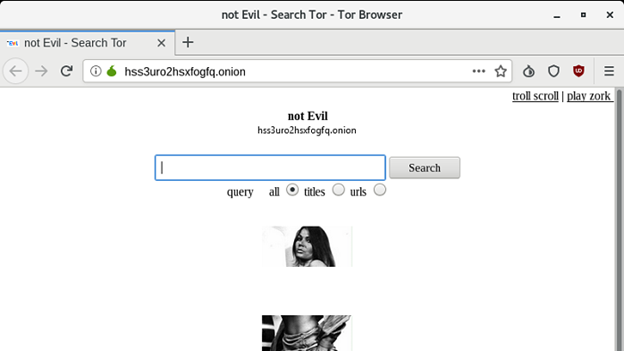
You might wonder why people would give away their internet speed for free. For many, it is a belief in the fundamental right to privacy - this community driven model means that the network is owned by everyone and no one at the same time. It is a collaborative effort that spans every continent, creating a web that is much harder to censor than traditional service providers - this architecture is what allows for tools like the not evil tor search engine to exist without being tied to a specific physical location.
Searching on an anonymous network is very different from using a standard search engine. Standard engines use "spiders" that crawl the open web and index everything they find. Many parts of the anonymous web are not linked to each other in traditional ways. They do not have "dot com" addresses - instead, they use long strings of characters that end in special suffixes like ".onion".
Search engines designed for these networks have to be more specialized. They often rely on manual submissions or very slow, careful crawling to respect the privacy of the sites they index. They also do not track your search history. When you type a query, the engine provides results without building a profile on you, which means the results are objective and not influenced by your previous clicks or your physical location.
Key features of the search engines include
As artificial intelligence and data scraping become more advanced, the technology behind anonymous networks is also changing. New protocols are being developed to make the connection even faster without losing security. One of the biggest complaints about anonymous browsing is the speed but newer "padding" techniques and better node selection algorithms are closing that gap. We are moving toward a future where being private does not have to mean being slow.
Privacy is becoming a mainstream concern - You no longer have to be a computer scientist to use these tools. Simple browser interfaces have made this technology accessible to anyone with a computer. By choosing to use these networks, you are taking back control of your digital footprint. It is a small step that has a large impact on how your personal information is used and stored by others.
In most countries, using privacy tools and anonymous networks is perfectly legal. They are used daily by journalists, activists and ordinary individuals who want to avoid being tracked by advertisers. You should always check the specific laws in your own region, as some places have different rules regarding encryption.
While the network hides your location and the path of your data, it cannot protect you if you voluntarily give away your information. If you log into a social media account or enter your real name on a form while using an anonymous browser, the site will still know who you are. The technology hides your "how" and "where" but you are still responsible for the "who"
The speed is lower because your data has to travel through multiple different servers across the world instead of going straight to the destination. Each stop adds a little bit of time. The multiple layers of encryption take a small amount of processing power to wrap and unwrap at every hop along the way.
No, you do not need any special equipment - Many of these networks work through specific software or browsers that you can install on your existing computer or smartphone. The heavy lifting is done by the software and the network of volunteer servers - your device just needs a basic internet connection.
| Price: | 1 |
| Categories: | Services / Web Services |
| Phone: | 9549008529 |
| Address: | 444 Alaska Avenue Suite #BOF33 |
| Website: | View our site |
| Email: | harrycain120@gmail.com |