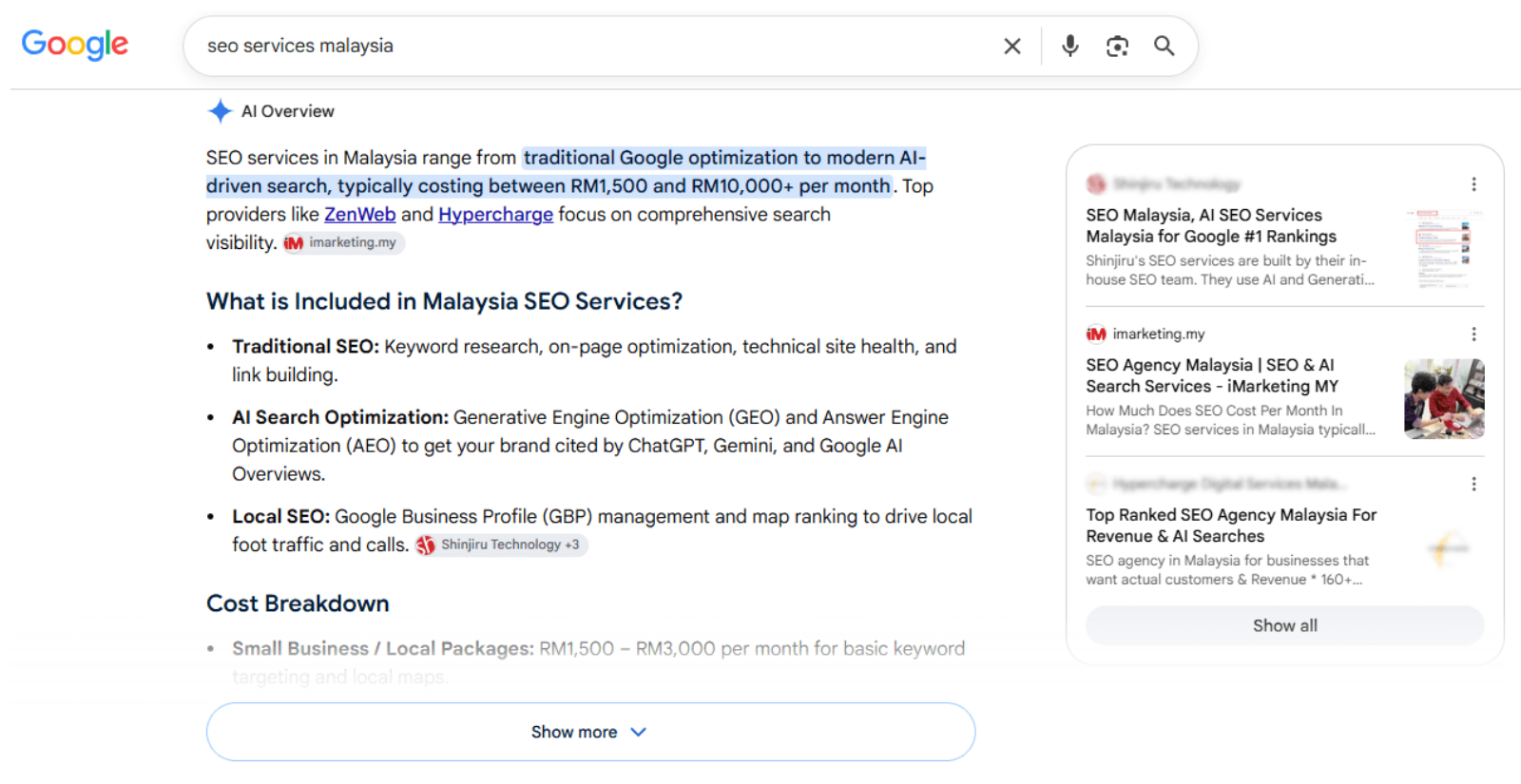
In Malaysia's increasingly competitive digital marketplace, businesses need more than an attractive website to stand out online. They need a strategic approach that helps potential customers discover their products and services through search engines, evaluate their expertise, and take action. Whether you operate a local service business in Kuala Lumpur, an e-commerce store in Selangor, or a B2B company serving customers nationwide, search engine optimization (SEO) can play an important role in your digital growth.
Two essential components of a successful SEO strategy are website optimization and link building. Website optimization helps search engines understand your content, while link building can strengthen your website's authority when it earns relevant, trustworthy backlinks from other websites. Together, these activities can support stronger organic visibility and help businesses reach more qualified audiences.
A professional seo optimization service combined with a strategic Link Building Malaysia campaign can help businesses identify ranking opportunities, improve website performance, build industry credibility, and attract potential customers. However, effective SEO requires more than inserting keywords or acquiring large numbers of backlinks. It demands careful planning, relevant content, ethical practices, and continuous performance monitoring.
This guide explains how SEO optimization and link building work, why Malaysian businesses should invest in these services, and how to develop a sustainable strategy that supports long-term business objectives.
SEO optimization is the process of improving a website so that search engines can discover, understand, and potentially rank its pages for relevant searches. It also involves improving the experience users have when they visit the website.
An effective SEO campaign considers the technical condition of the website, the relevance of its content, its internal structure, and its reputation across the web.
Professional SEO optimization commonly includes:
Keyword research and search intent analysis.
On-page SEO and metadata improvements.
Technical SEO audits and issue resolution.
Content creation and optimization.
Internal linking and website architecture improvements.
Competitor and search visibility analysis.
Backlink profile analysis and link acquisition.
Organic traffic, lead, and conversion reporting.
These activities work together. For example, acquiring backlinks to a poorly structured website with thin content may not produce the desired business results. Similarly, publishing excellent content can limit its potential if search engines cannot properly access important pages.
A coordinated strategy addresses the website as a whole rather than treating individual SEO tasks as isolated activities.
Search engines are an important starting point for people researching products, comparing providers, and finding local businesses. Appearing for relevant searches can help a company reach potential customers when they are actively looking for a solution.
For example, a business offering accounting services may target queries related to corporate accounting, tax preparation, or bookkeeping services in Malaysia. An ergonomic furniture retailer might focus on searches related to office chairs, standing desks, and ergonomic furniture in Kuala Lumpur.
The most valuable keywords are not necessarily those with the highest search volume. They are the queries that connect the business with an appropriate audience and have a realistic opportunity to contribute to its goals.
Paid advertising can generate visibility quickly, but it usually requires ongoing spending to maintain traffic. SEO offers a complementary channel through which useful website pages can continue attracting organic visitors after publication.
Organic traffic is not free: businesses still need to invest in content, technical improvements, analysis, and maintenance. Nevertheless, a well-managed SEO strategy can build long-term value by improving the visibility and usefulness of existing website assets.
Potential customers often compare multiple providers before making a decision. A website that offers clear service information, useful resources, case studies, and trustworthy references can help establish credibility.
Strong organic visibility may also increase brand awareness because people repeatedly encounter the business while researching related topics.
However, rankings alone do not establish trust. Businesses should support their online presence with accurate information, transparent claims, genuine customer feedback, and a website experience that reflects their professionalism.
SEO should contribute to business outcomes, not just higher rankings. Service pages, location pages, product categories, and educational articles should help visitors understand the available solutions and decide what to do next.
For B2B businesses, this might mean requesting a quotation or arranging a consultation. For e-commerce stores, it could mean viewing a product or completing a purchase.
Clear calls to action, relevant internal links, and accessible contact information help connect organic traffic with these goals.
Link building is the process of earning or acquiring hyperlinks from other websites that point to your website. These links are commonly called backlinks.
Search engines can use links as signals when discovering pages and assessing their relationships or importance. Relevant, editorially earned backlinks may support a website's authority and search visibility, although no individual backlink guarantees higher rankings.
The quality and context of a backlink matter. A link from a respected website within your industry may provide more value than numerous links from unrelated, low-quality websites.
Effective link building focuses on earning references that make sense for readers, publishers, and the businesses involved.
Editorial backlinks: Links included naturally by publishers who consider your content useful or relevant to their audience.
Digital PR links: Links earned through newsworthy announcements, original research, expert commentary, or useful data.
Guest contributions: Relevant articles written for legitimate industry publications, where the content offers genuine value to readers and links comply with search engine policies.
Business directories and citations: Accurate listings on reputable business directories or relevant local platforms.
Resource page links: Links from curated pages that recommend useful tools, guides, organizations, or industry resources.
Unlinked brand mentions: Situations where a website references a business without linking to it. Where appropriate, the publisher may be willing to add a link.
Not every opportunity is suitable for every business. Link acquisition should be based on relevance, editorial standards, audience value, and compliance with search engine guidelines.
A well-planned Link Building Malaysia campaign can help businesses improve their online presence by earning references from relevant local and industry websites.
Links from reputable Malaysian publications, business associations, industry websites, and relevant organizations can help establish contextual connections between a business and its market.
For example, a Malaysian technology provider may benefit from relevant coverage on technology publications or business resources. A local hospitality company may find suitable opportunities through travel-related publishers and tourism organizations.
The goal should be to earn legitimate mentions from sources whose audiences and subject matter align with the business.
A Malaysian domain is not automatically valuable simply because it ends in .my. Relevance, editorial quality, audience trust, and the circumstances in which the link is provided should all be considered.
Links can provide pathways through which search engine crawlers discover pages. A relevant link to a new guide or service page may help search engines find it, especially when the page is also supported by good internal linking and an accessible site structure.
Link building should therefore complement, rather than replace, technical SEO and internal linking.
A backlink can deliver value even when it does not produce an immediate ranking improvement. Readers who click a relevant link may visit your website, explore your offerings, or contact your business.
For this reason, link building should consider the publisher's audience and the likelihood that the link will attract interested visitors.
A link on a relevant industry resource may generate fewer clicks than a link on a large general website, but those visitors could be more valuable if they are closely aligned with your target market.
Being featured in relevant publications can introduce a business to new audiences. Industry interviews, expert contributions, research reports, and useful resources can all create opportunities for legitimate brand exposure.
Over time, these activities may support broader brand recognition and create additional opportunities for customers, partners, and publishers to discover the business.
SEO optimization and link building are most effective when they support a shared strategy.
First, keyword research identifies the search queries and topics that matter to the business. Next, content planning determines which pages can satisfy those searches. On-page and technical SEO then help make the website accessible and useful. Finally, relevant outreach and digital PR can help the strongest resources earn appropriate external references.
For example, a Malaysian B2B company could create a comprehensive guide explaining how businesses should evaluate a particular technology solution. The guide could include original data, practical examples, and expert commentary. The company could then introduce the resource to relevant industry publishers or associations that might find it useful.
If the guide earns relevant backlinks, those links may support its discovery, referral traffic, and organic visibility. Internal links can also guide readers from the guide to related service pages.
This approach is more sustainable than acquiring backlinks without considering the quality of the destination page or the needs of the target audience.
Keyword research helps determine what potential customers search for and which opportunities deserve priority.
Businesses should evaluate search intent, competition, estimated search demand, commercial relevance, and geographic targeting.
For Malaysia-focused campaigns, keyword research may include relevant English and Malay queries, as well as other languages where they genuinely reflect the target audience. Keyword selection should be based on customer behaviour rather than assumptions about language preference.
Organize keywords by topic and page purpose to reduce unnecessary overlap. A service page targeting commercial intent should have a distinct purpose from an educational article covering the same broad subject.
On-page SEO helps search engines and users understand each page.
Important elements include:
Descriptive and unique title tags.
Clear H1, H2, and H3 headings.
Useful, accurate page content.
Relevant meta descriptions.
Concise and descriptive URLs.
Contextual internal links.
Descriptive image alt text where appropriate.
Clear calls to action on commercial pages.
Keywords should appear naturally where they help communicate the subject. Repeating phrases excessively does not create a better user experience and may be counterproductive.
Technical problems can prevent search engines from accessing or properly interpreting important pages.
A technical SEO review may examine crawlability, indexability, XML sitemaps, canonical tags, redirects, broken links, mobile usability, page performance, and duplicate content.
For websites with many pages, these checks can help identify issues that affect large sections of the site.
Technical improvements should be prioritized according to their impact, severity, and relevance to the website's business objectives.
Content gives visitors a reason to explore your website and helps search engines understand what your business offers.
Useful content may include service pages, product descriptions, detailed guides, industry commentary, comparison articles, and answers to common customer questions.
Rather than publishing articles simply to increase volume, businesses should identify content gaps and develop resources that address real audience needs.
Content should be fact-checked, updated when necessary, and written for people first. AI tools can support research and drafting, but editorial review remains important to ensure accuracy, originality, and relevance.
Internal links connect related pages within your website. They help visitors navigate between resources and provide pathways for search engine crawlers.
For example, an article about SEO audits could link to a relevant technical SEO service page, a guide to keyword research, and an explanation of content optimization.
Use descriptive anchor text that accurately reflects the destination. Avoid excessive exact-match keyword repetition or links that do not provide value to the reader.
Begin by identifying the pages and business objectives the campaign should support. These might include improving the visibility of an important service page, promoting an original research report, increasing referral traffic, or building industry recognition.
A clear goal makes it easier to select appropriate publishers and evaluate campaign results.
Look for publishers and organizations whose content, audience, and editorial standards align with your industry.
Potential sources include Malaysian business publications, professional associations, specialist blogs, local organizations, relevant educational resources, and legitimate industry directories.
Evaluate each prospect manually. Consider content quality, topical relevance, audience engagement, publishing standards, and whether the website appears to exist primarily to sell backlinks.
Third-party authority metrics can help organize research, but they are estimates and should not be treated as direct Google ranking factors.
Publish something that gives other websites a genuine reason to reference your business.
Useful assets include original research, detailed industry guides, practical checklists, expert commentary, case studies, calculators, and relevant data.
A resource is more likely to earn editorial attention when it offers information that is difficult to find elsewhere or makes an existing topic easier to understand.
When contacting publishers, explain why your resource may benefit their readers. Refer to a relevant article or topic on their website, introduce the value of your contribution, and make a clear, professional request.
Avoid sending large volumes of generic messages or misrepresenting your relationship with a publisher.
Outreach should prioritize relevance and usefulness rather than treating every website as a link opportunity.
Maintain a record of acquired links and review them periodically. Useful fields include the referring domain, linked page, placement context, link attributes, acquisition date, and relevant referral or organic performance.
Investigate unusual backlink patterns, but do not assume every low-quality link requires removal. Search engines generally ignore many ordinary low-quality links, and indiscriminate disavowal can be harmful. The disavow tool is intended for specific situations involving substantial unnatural link issues, not routine backlink cleanup.
Not all backlink acquisition methods are beneficial. Some tactics can violate search engine spam policies or create unnecessary risk.
Avoid practices such as:
Buying links intended to manipulate search rankings.
Participating in link exchanges designed primarily to pass ranking credit.
Using automated programs to generate backlinks.
Creating large numbers of low-quality guest posts solely for links.
Placing keyword-rich links across unrelated websites.
Using private blog networks intended to manipulate search results.
Publishing mass-produced content on third-party sites for the primary purpose of link manipulation.
Paid sponsorships and advertising can be legitimate marketing activities, but links should be appropriately qualified using attributes such as rel="sponsored" or rel="nofollow" where applicable.
A sustainable strategy prioritizes genuine editorial value, relevant relationships, and compliance with search engine guidelines.
A successful campaign should be evaluated through a combination of search visibility, link quality, referral activity, and business results.
Use Google Search Console to monitor impressions, clicks, click-through rates, search queries, and page performance. Review whether priority pages are gaining visibility for relevant terms over time.
Track referring domains, link placements, destination pages, and the relevance of linking websites. Focus on the quality of the overall backlink profile rather than chasing a specific number of links.
Analytics tools can help determine whether visitors arrive through backlinks and whether they engage with the website or complete meaningful actions.
Measure inquiries, quotation requests, purchases, bookings, and other business outcomes. Where possible, connect SEO activity to conversion data so that reports demonstrate commercial value.
SEO results can take time and may fluctuate because of competition, algorithm changes, and other factors. Compare performance over appropriate periods and avoid drawing conclusions from short-term movements alone.
Selecting a suitable provider requires more than comparing package prices or promised backlink quantities.
A professional agency should understand your business model, target audience, competitors, and commercial objectives. It should explain how technical SEO, content, and link acquisition fit together.
Request an explanation of how the agency evaluates publishers, selects target pages, and ensures that its activities follow search engine guidelines. Be cautious of guaranteed quantities of high-authority links without clear information about their sources or methods.
Reports should explain what was completed, which opportunities were pursued, what results were observed, and what actions are recommended next.
A trustworthy provider should communicate clearly about costs, deliverables, expected timelines, and potential limitations. Avoid providers that guarantee specific rankings or conceal their link building methods.
The best campaign is not necessarily the one that acquires the most links. It is the one that supports relevant visibility, attracts appropriate audiences, and contributes to your company's goals.
High-impact SEO optimization and link building can help Malaysian businesses improve organic visibility, strengthen their online reputation, and reach potential customers more effectively. SEO optimization helps ensure that a website is accessible, relevant, and useful, while strategic link building can help valuable pages earn recognition from appropriate external sources.
The strongest results come from combining these activities with keyword research, high-quality content, technical improvements, ethical outreach, and consistent performance measurement.
Instead of focusing exclusively on rankings or backlink volume, businesses should build a strategy around audience needs and measurable commercial outcomes. By investing in sustainable SEO practices and continuously improving their website, Malaysian companies can create a stronger foundation for long-term digital growth.
An SEO optimization service helps improve a website's search visibility through activities such as keyword research, on-page optimization, technical SEO, content improvements, internal linking, and performance monitoring.
Link Building Malaysia refers to backlink acquisition and digital PR activities aimed at earning relevant links from Malaysian websites or other sources that are appropriate for a Malaysia-focused business. The objective is to build relevant online visibility, not simply collect links from local domains.
There is no guaranteed timeline. Results depend on website condition, competition, content quality, technical issues, search demand, and the consistency of implementation. Meaningful progress often requires ongoing work over several months.
There is no universal number of backlinks required to rank. The appropriate backlink profile depends on the website, its industry, the competition, and the quality of its content. Relevant editorial links and a strong website foundation are generally more valuable than arbitrary link targets.
Links can help search engines discover pages and can act as signals of relevance or importance. However, they are only one part of SEO. Content quality, technical accessibility, search intent, usability, and other factors also matter.
A professional agency may be useful when a business needs specialist expertise, consistent implementation, technical support, content development, or structured link building. Businesses should choose providers based on transparency, strategic fit, ethical methods, and measurable objectives rather than ranking guarantees.
| Categories: | Services / Web Services |
| Phone: | 01234578902 |
| Address: | A-W-09, Jalan John, Inter Milan, IN Bahamas |
| Website: | View our site |
| Email: | kadewi8228@iotrama.com |