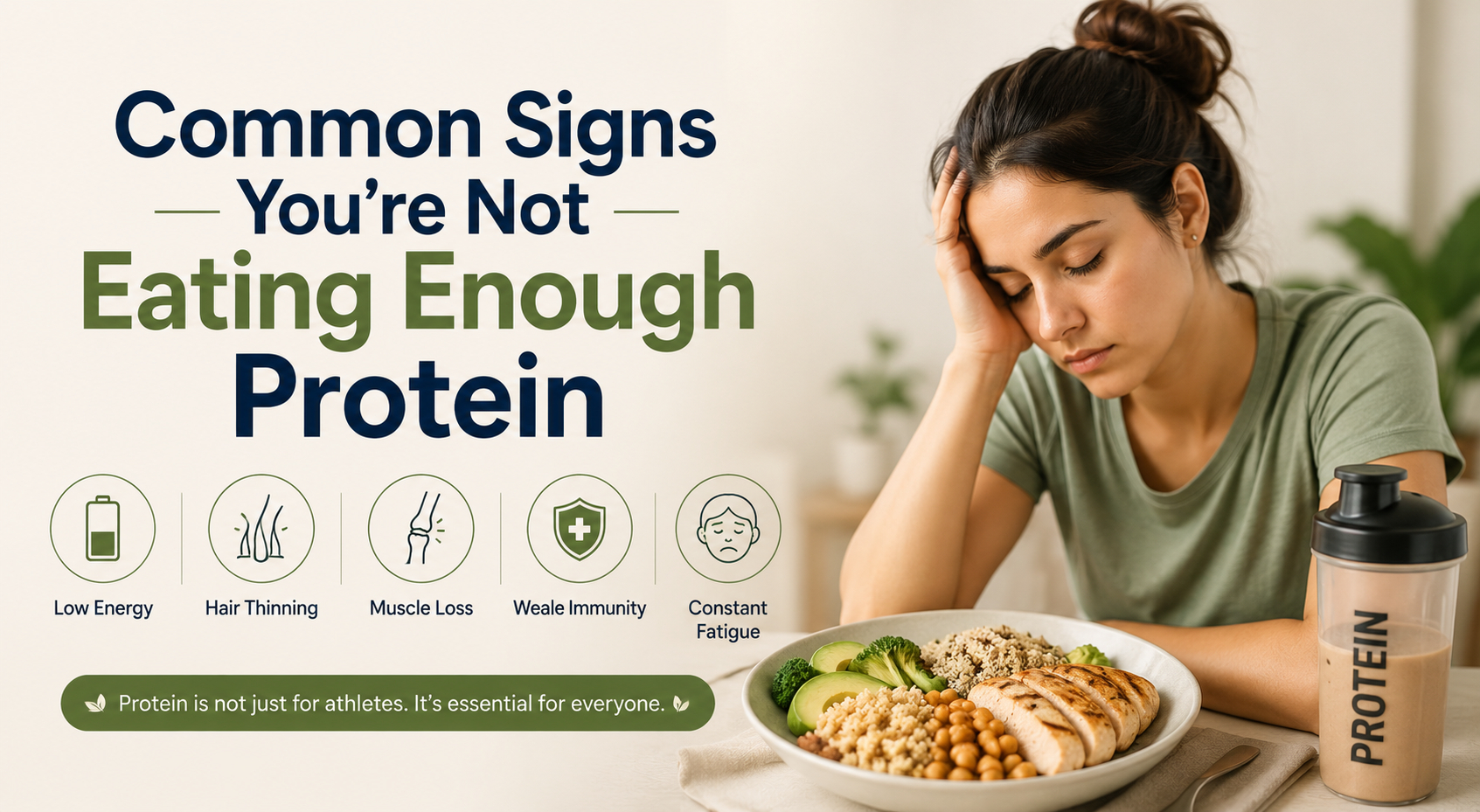
Your body uses protein to maintain muscles, repair tissues, support hormones, enzymes, immune function, and many other processes.
The tricky part is that low protein intake does not always feel obvious at first. You may simply feel more tired, notice changes in your hair or muscles, or find yourself hungry again soon after eating.
So, how do you know if you are getting enough?
Protein is made up of amino acids that your body needs for different functions.
Your body can make some amino acids, while others need to come from food. This is why your daily meals should include reliable protein sources.
For Indian diets, protein can come from both vegetarian and non-vegetarian foods.
Some common choices include:
Dal and other pulses
Chana and rajma
Soybeans and tofu
Paneer and curd
Milk
Eggs
Fish and chicken
Nuts and seeds
Your protein needs depend on factors such as age, body size, physical activity, and health status. A person who exercises regularly may need more protein than someone with a mostly sedentary routine.
Do you finish a meal and feel hungry again within an hour or two?
Your meal may be missing enough protein.
Protein can help you feel satisfied after eating. When your meals mainly contain refined carbohydrates, such as biscuits, white bread, or sugary cereals, you may find yourself reaching for another snack soon.
Try adding curd to breakfast, dal to lunch, or eggs to a meal if they fit your diet.
Your muscles need protein for maintenance and repair.
If your overall protein intake stays low, maintaining muscle mass can become harder, especially as you get older or when you are losing weight.
You may notice that everyday activities feel more difficult or that your strength during workouts is dropping.
This does not mean low protein is always the reason. Poor sleep, low calorie intake, stress, and other health factors can also affect strength.
Weight loss is not only about the number on the scale.
When you reduce your food intake, your body can lose both fat and muscle. Getting enough protein, along with regular resistance exercise, can help support muscle maintenance during weight loss.
If your goal is fat loss, simply eating less may not be the best approach.
Build meals around protein, vegetables, whole grains, and healthy sources of fat instead.
Hair and nails contain proteins, including keratin.
Poor overall nutrition can affect hair and nail health. Inadequate protein intake may contribute when the diet is also lacking other nutrients.
If you notice sudden or significant hair loss, do not assume protein is the only cause. Iron deficiency, thyroid problems, hormonal changes, stress, and other conditions can also play a role.
Food is worth looking at first, though. Are you regularly eating protein-rich foods?
Your body needs protein to build and repair tissues.
If your diet does not provide enough protein and other nutrients, tissue repair may be affected. This can matter more after an injury or surgery, or during periods when your body needs extra nutrition.
A balanced diet gives your body the raw materials it needs for normal repair.
Protein itself is not your body's main source of energy. Carbohydrates and fats play major roles in providing energy.
Still, consistently eating too little protein can be part of an overall diet that does not meet your nutritional needs.
For example, if breakfast is only tea and biscuits, followed by a small lunch and a light dinner, you may simply not be eating enough food or enough nutrients.
Look at your whole day rather than blaming one nutrient.
There is no single protein target that works for everyone.
A commonly used reference value for healthy adults is around 0.8 grams of protein per kilogram of body weight per day. People who are older, physically active, trying to preserve muscle during weight loss, or dealing with certain health conditions may have different needs.
For example, a 60 kg ***** using the 0.8 g/kg reference would need about 48 grams of protein per day.
That does not mean you should immediately start taking supplements.
Your regular meals may provide much of what you need.
You do not need complicated recipes.
Try small changes such as:
Add dal to lunch or dinner
Choose curd with meals
Include paneer or tofu in vegetable dishes
Add roasted chana as a snack
Use sprouts in salads or chaat
Include eggs if you eat them
Add milk to breakfast
Include fish or chicken in suitable meals
Add nuts and seeds in sensible portions
If you are unsure how much protein suits your diet, speaking with a qualified nutritionist in Pune can help you understand your needs based on your eating pattern, activity level, and health goals.
Eating enough protein is one part of the picture. The quality and variety of your food matter as well.
Vegetarian diets can provide enough protein when you regularly include foods such as pulses, dairy, soy, nuts, and seeds.
You can also combine different foods across the day rather than worrying about creating a perfect protein combination at every meal.
For example, dal with rice, roti with curd, or chana with whole-grain foods can form part of a balanced eating pattern.
Take a closer look if most of your meals contain very little protein.
A simple check is to look at your plate.
Does each main meal contain a clear protein source?
If breakfast is mostly carbohydrates, lunch has only a small serving of dal, and dinner contains mainly rice or roti, your daily intake may fall short.
Instead of making a major change overnight, start by adding one protein-rich food to each main meal.
Small changes are often easier to maintain, and your diet does not need to revolve around protein shakes to support your nutritional needs.
| Categories: | Services / Other Services |
| Phone: | 09094546546 |
| Address: | Karnataka |
| Website: | View our site |
| Email: | gauri@advexity.com |