For children with autism, ADHD, or Down syndrome, finding a specialised dental professional is essential. A trained paediatric dentist provides necessary adaptations—such as desensitisation visits, quiet rooms, and visual schedules—to safely manage sensory overload and complex medical needs that standard dental clinics are not equipped to handle.
Dental visits are stressful for most children, but for a child with special needs, the experience can be entirely overwhelming. Bright lights, unfamiliar noises, and sudden physical contact often trigger intense anxiety or sensory overload. As a result, many parents of children with autism, ADHD, or Down syndrome feel frustrated and turned away by standard dental practices. Finding a qualified pediatric dentist is the critical first step to ensuring your child receives safe, compassionate, and effective oral healthcare.
Parents frequently report visiting multiple clinics only to be told the staff cannot accommodate their child's behavioural unpredictability or medical complexity. This lack of access leaves an already vulnerable group at a much higher risk for severe dental decay and oral infections. A standard 15-minute appointment simply does not work for a child who requires time to process new environments.
Specialist dental care bridges this gap. Professionals trained in special care dentistry understand that treating a child with neurodevelopmental or genetic conditions requires patience, specialised behavioural techniques, and a deeply empathetic approach. By choosing a specialist, parents can transform a highly stressful ordeal into a manageable, routine health habit.
Most general dental practitioners do not receive extensive training in managing sensory overload or complex behavioural needs. A standard dental clinic operates on a strict schedule, which leaves very little room for patients who need extra time to acclimate to the dental chair.
Furthermore, general clinics are often loud and visually stimulating. The sounds of drills, suction tubes, and beeping monitors can instantly overstimulate a child with autism or ADHD. Without training in behavioural unpredictability, standard dentists may feel unequipped to safely examine a child who cannot sit still or follow verbal instructions. Additionally, children with conditions like Down syndrome or cerebral palsy often have underlying medical complexities—such as congenital heart disease or bleeding disorders—that require advanced clinical knowledge to manage safely during dental procedures.
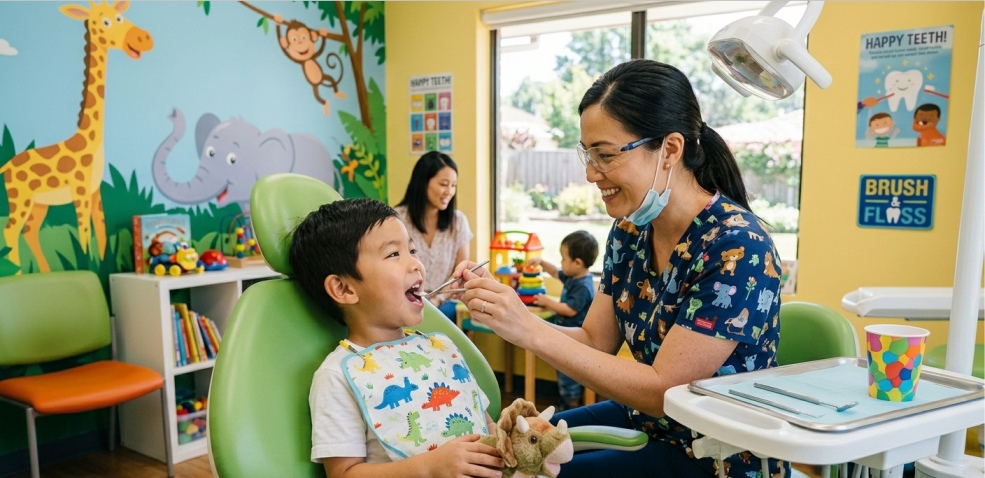
A paediatric dentist designs the entire clinical experience around the unique needs of the child. These specialists implement specific strategies to build trust and ensure safety.
Rather than rushing into an examination, specialists often schedule 5 to 10 short desensitisation visits. These introductory appointments allow the child to explore the clinic, sit in the chair, and meet the staff without any actual dental work taking place. This gradual exposure significantly reduces anxiety.
Children with autism and ADHD often benefit from knowing exactly what to expect. Paediatric clinics use visual schedules and social stories—picture books or step-by-step visual guides—to explain the dental visit in a clear, non-threatening way before the appointment even begins.
Sensory management is a top priority. Many specialist clinics feature dedicated quiet rooms equipped with dimmable lighting and noise-cancelling headphones. These rooms remove the distressing sounds of standard dental equipment, creating a calm environment for the child.
Standard clinics often ask parents to wait in the reception area. Conversely, special needs dental specialists actively encourage parents to stay in the treatment room. The presence of a trusted caregiver provides immediate comfort and helps the dental team understand the child's specific communication cues.
Paediatric dentists are heavily trained to manage a wide spectrum of physical, cognitive, and developmental conditions. Common conditions managed include:
Finding the right professional in Malaysia requires knowing where to look. Below is a helpful guide to locating clinics and hospitals that openly advertise special needs care across different states:
Note: Always call ahead to confirm the clinic's current policies and to discuss your child's specific medical history before booking an appointment.
Securing reliable dental care for a child with special needs does not have to be an endless source of stress. By seeking out a qualified professional who understands sensory overload, behavioural pacing, and medical complexities, you protect your child from unnecessary trauma. If you have been turned away by general practitioners in the past, use the regional guide above to contact a specialist clinic today and request an initial desensitisation visit.
A desensitisation visit is a short, stress-free appointment where no actual dental treatment is performed. The goal is to allow the child to become familiar with the clinic environment, the dental chair, and the staff to reduce anxiety for future visits.
Costs vary significantly between government hospitals and private clinics. Government hospitals (like UMMC or Hospital Tunku Azizah) offer highly subsidised rates for Malaysian citizens, often costing under RM 50 per visit. Private specialist clinics typically charge between RM 150 and RM 350 for a consultation.
Yes. If behavioural techniques and desensitisation are not sufficient, a paediatric dentist can safely administer nitrous oxide (laughing gas) or arrange for treatment under general anaesthesia in a hospital setting.
All children, including those with Down syndrome, should have their first dental visit by their first birthday or within six months of their first tooth erupting. Early visits help monitor delayed tooth eruption and establish a preventative care routine.
| Price: | 200 |
| Categories: | Services / Health & Beauty Services |
| Phone: | 01234578902 |
| Address: | A-G-10, Office Tower Suite, Petaling Jaya, Selangor |
| Website: | View our site |
| Email: | ishazwan47@gmail.com |