Uterine fibroids are common non-cancerous growths that develop in or around the uterus. Many women with fibroids have no symptoms and may not require treatment. However, fibroids can sometimes cause heavy menstrual bleeding, pelvic pressure, pain, frequent urination, or fertility-related concerns.
When symptoms significantly affect quality of life or other treatments are not suitable, a doctor may discuss surgical options. Fibroid removal surgery can take several forms, and the most appropriate approach depends on factors such as the number, size, and location of fibroids, symptoms, age, overall health, and future pregnancy plans.
This guide explains the main types of fibroid removal surgery, their potential benefits and risks, the preparation process, and what recovery may involve.
Uterine fibroids are growths that develop from the muscle and connective tissue of the uterus. They can vary considerably in size and may occur as a single growth or as multiple fibroids.
Fibroids are generally benign, meaning they are not cancerous.
Their location can influence the symptoms they cause. Common types include:
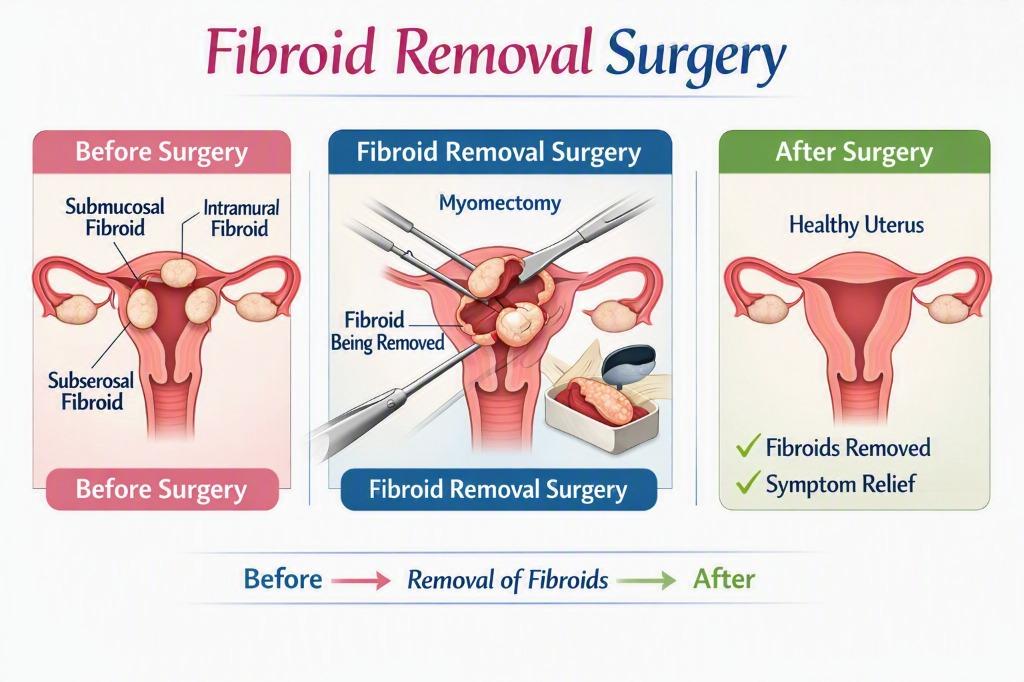
Submucosal fibroids: Grow toward the inside of the uterine cavity.
Intramural fibroids: Develop within the muscular wall of the uterus.
Subserosal fibroids: Grow toward the outer surface of the uterus.
Some fibroids may be small and cause no noticeable symptoms, while larger or strategically located fibroids may produce significant problems.
Not every woman with fibroids needs treatment. When symptoms occur, they can vary depending on the size and location of the growths.
Common symptoms include:
Heavy or prolonged menstrual bleeding
Painful periods
Pelvic pressure or discomfort
Lower abdominal pain
Backache
Frequent urination
Constipation or pressure on the bowel
Pain during ****** intercourse
Abdominal enlargement
Fertility or pregnancy-related concerns
If symptoms are persistent or interfere with daily activities, a gynaecological assessment can help determine whether fibroids are responsible.
Surgery is not automatically required when fibroids are diagnosed. Treatment depends on symptoms, fibroid characteristics, reproductive goals, and overall health.
A specialist may consider surgery when fibroids:
Cause significant or persistent symptoms
Result in heavy menstrual bleeding
Cause substantial pelvic pressure or pain
Affect the uterine cavity
Contribute to certain fertility problems
Grow significantly or cause concerning symptoms
Do not respond adequately to other treatment approaches
The decision should be made after discussing the potential benefits, risks, alternatives, and implications for future fertility.
A myomectomy is a surgical procedure that removes fibroids while leaving the uterus in place.
This approach may be considered for women who want to preserve their uterus, including some women who may wish to become pregnant in the future.
Myomectomy can be performed using different surgical techniques.
A hysteroscopic procedure is performed through the vagina and cervix, without making an abdominal incision.
A surgeon uses a hysteroscope, a thin instrument with a camera, to access the uterine cavity and remove suitable fibroids.
This approach is generally used for fibroids that project into the uterine cavity, particularly certain submucosal fibroids.
Potential advantages can include:
No abdominal incision
Less invasive access
Typically shorter recovery than abdominal surgery
However, hysteroscopic surgery is not suitable for every fibroid. The size, number, and exact location of the fibroid are important factors.
Laparoscopic myomectomy is a minimally invasive procedure performed through small abdominal incisions.
A camera and specialised surgical instruments are inserted through these small openings to remove fibroids.
Potential benefits compared with open abdominal surgery may include:
Smaller incisions
Less postoperative discomfort
Shorter hospital stay in appropriate cases
Faster return to normal activities
However, not every patient or fibroid is suitable for a laparoscopic approach. The number, size, and location of fibroids, along with the surgeon's assessment, influence whether this technique is appropriate.
An abdominal myomectomy involves a larger incision in the abdomen to access the uterus and remove fibroids.
This approach may be considered when fibroids are particularly large, numerous, or positioned in a way that makes minimally invasive surgery unsuitable.
Recovery is generally longer than with minimally invasive approaches, but open surgery may provide an appropriate option for selected patients.
A hysterectomy involves removing the uterus rather than removing individual fibroids.
Because the uterus is removed, pregnancy is no longer possible after a hysterectomy.
A hysterectomy may be considered for women who:
Have severe or persistent fibroid-related symptoms
Have large or numerous fibroids
Do not wish to become pregnant in the future
Have not achieved adequate symptom control with other treatments
Depending on the circumstances, hysterectomy may be performed through different surgical approaches, including abdominal, laparoscopic, or vaginal surgery.
The appropriate approach depends on factors such as uterine size, previous surgeries, medical history, and the surgeon's assessment.
Although this article focuses on surgery, surgery is only one possible approach to managing fibroids.
Depending on symptoms and individual circumstances, a healthcare professional may discuss:
Medication to manage symptoms
Hormonal treatments
Non-hormonal medication
Uterine artery embolisation
Other minimally invasive procedures
Monitoring without immediate treatment
The most appropriate treatment depends on your symptoms, the characteristics of the fibroids, reproductive goals, and overall health.
When surgery is appropriate, removing fibroids can potentially improve symptoms and quality of life.
Potential benefits may include:
Removing symptomatic fibroids can reduce heavy menstrual bleeding in appropriately selected patients.
Large fibroids can create pressure in the pelvis or abdomen. Removing them may reduce this sensation.
Some women may experience improvement in fibroid-related pelvic discomfort or painful periods following treatment.
Reducing troublesome symptoms can make it easier to work, exercise, sleep, and participate in everyday activities.
Certain fibroids, particularly those that affect the uterine cavity, may be associated with fertility difficulties. In selected patients, removal may be recommended as part of fertility management.
However, surgery does not guarantee pregnancy, and fertility outcomes depend on many other factors.
Like any surgical procedure, fibroid surgery has potential risks. The level of risk depends on the procedure, the patient's health, and the characteristics of the fibroids.
Potential risks may include:
Bleeding
Infection
Blood clots
Reaction to anaesthesia
Injury to surrounding organs
Scar tissue formation
Need for additional treatment
Recurrence of fibroids after myomectomy
In some cases, significant bleeding during myomectomy may require additional intervention, including blood transfusion or, rarely, removal of the uterus.
Your surgeon should explain the risks that are specifically relevant to your procedure before surgery.
Fertility is an important consideration for many women diagnosed with fibroids.
The effect of fibroids on fertility depends on factors such as their size and location. Fibroids that distort the uterine cavity may be more relevant to fertility than fibroids that do not affect the cavity.
Myomectomy preserves the uterus and may therefore be considered for selected women who wish to maintain the possibility of future pregnancy.
However, the decision to undergo surgery should be individualised. Surgery itself can cause scar tissue, and not every fibroid needs to be removed simply because it is present.
If pregnancy is an important goal, discuss your reproductive plans with your gynaecologist before choosing a treatment approach.
Before surgery, your healthcare provider will usually assess the fibroids and your overall health.
Depending on your circumstances, evaluation may include:
Medical history
Pelvic examination
Ultrasound
Additional imaging when appropriate
Blood tests
Assessment of menstrual symptoms
Discussion of fertility goals
Imaging helps the medical team understand the number, size, and location of fibroids and determine which treatment approaches may be appropriate.
Your healthcare team will provide specific instructions before the procedure.
Preparation may include:
Reviewing current medications
Completing recommended blood tests
Discussing allergies and medical conditions
Following fasting instructions
Arranging transportation and support after surgery
Discussing time away from work
Understanding medication instructions
If you take blood-thinning medication or other prescription medicines, do not stop them unless your healthcare provider specifically advises you to do so.
The exact process depends on the surgical technique.
For a hysteroscopic procedure, the surgeon accesses the uterus through the vagina and cervix.
For laparoscopic surgery, small abdominal incisions are used to introduce a camera and surgical instruments.
For open myomectomy, a larger abdominal incision provides access to the uterus.
The surgeon removes the targeted fibroids while aiming to preserve healthy uterine tissue where appropriate.
The duration of surgery varies depending on the number, size, and location of the fibroids and the chosen surgical technique.
Recovery varies considerably depending on the type of surgery.
Recovery may be relatively short, although some bleeding, cramping, or discomfort can occur.
Your healthcare provider will advise you when you can return to normal activities.
Recovery is generally faster than after open surgery. Patients may experience abdominal discomfort, fatigue, or bloating during the early recovery period.
Light activities may be resumed gradually according to medical advice.
Recovery usually takes longer because the abdominal incision is larger.
Patients may need several weeks before returning fully to their usual activities, depending on their recovery and the nature of their work.
Always follow the specific postoperative instructions provided by your surgical team.
Some discomfort and fatigue can be expected after surgery, but certain symptoms require medical attention.
Contact your healthcare provider promptly if you experience:
Heavy or increasing bleeding
Fever
Severe or worsening pain
Foul-smelling discharge
Redness or discharge from an incision
Difficulty breathing
Chest pain
Severe swelling or pain in a leg
Your medical team should provide specific instructions about when to seek urgent care.
After a myomectomy, new fibroids can develop in the future because the uterus remains in place.
Removing existing fibroids does not necessarily prevent new fibroids from forming.
A hysterectomy, on the other hand, removes the uterus and therefore eliminates the possibility of developing new uterine fibroids.
The choice between procedures should be based on individual symptoms, reproductive goals, medical circumstances, and professional advice.
Before deciding on surgery, consider asking:
How many fibroids do I have?
Where are they located?
Are my symptoms likely to be caused by the fibroids?
Do I need treatment now?
What non-surgical options are available?
Which surgical approach is most appropriate for me?
Will the procedure preserve my uterus?
Could treatment affect future fertility?
What are the potential complications?
How long might recovery take?
When can I return to work and exercise?
Can the fibroids return after treatment?
Having these questions answered can help you understand your options and make an informed decision.
If surgery is being considered, look for a qualified gynaecologist with relevant experience in managing fibroids and performing the proposed procedure.
Consider:
Specialist qualifications
Experience with fibroid treatment
Experience with minimally invasive techniques where appropriate
Access to suitable surgical facilities
Clear communication
Transparent information about treatment and costs
Appropriate follow-up care
A second opinion can also be useful if you are uncertain about whether surgery is necessary or which treatment approach is best for you.
Fibroid removal surgery can be an effective treatment for women whose fibroids cause significant symptoms or other problems. However, surgery is not automatically necessary for every woman with fibroids.
The appropriate approach depends on factors such as fibroid size and location, symptoms, overall health, previous treatments, and future pregnancy plans. Options can range from monitoring and medication to minimally invasive procedures, myomectomy, or hysterectomy.
If you have been diagnosed with fibroids, discuss your options with a qualified gynaecologist. Understanding the potential benefits, risks, recovery process, and impact on fertility can help you make a decision that is appropriate for your individual circumstances.
This information is intended for general education and does not replace personalised medical advice. If you have persistent, severe, or unusual symptoms, seek assessment from a qualified healthcare professional.
| Categories: | Services / Health & Beauty Services |
| Phone: | +65 6339 6659 |
| Address: | United States |
| Website: | View our site |
| Email: | xenoxev579@mediseat.com |